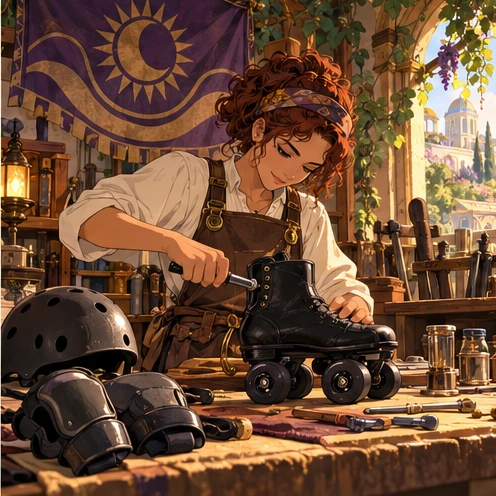
The six Derby gear categories
Helmet: one INT-linked position, with shell and liner. Pads: four STA-linked pieces, two knees and two elbows, independently enchanted. Weapons: usually two hands linked to STR. Skates: two AGI-linked boots with independent effects. Flair: one DEX-linked cosmetic object carrying stats or enchantment. Banner: the CHA-linked receiver for team buffs. These categories do not add six ordinary ability slots.
Weapon and Flair are display positions
Weapon and Flair sit beside the ten abilities on the character sheet. Other equipment is mode-specific. A two-hand allocation is not two extra skill slots; extra weapons require an explicit Class, Body, or other rule.
Craft during the match
The Dance Track supports crafting with resources earned on the track. Craftsmen turn Materials into recipes for their selected trades; access to one trade does not grant all trade recipes. One documented Knight exception permits main-track crafting with a 75% Attack penalty and a movement-related lap penalty. Another permits a Thief Point of Sale when no Merchant is present. The selected mode must supply the exact procedure.
Why the banner matters
In the documented Derby equipment model, a character without a banner receives heals and buffs at 50% effectiveness. Higher banner tiers can reach 100% or 115%. These are that mode’s values, not a universal multiplier applied to every AlterNet story or game.
Bonus positions must be explicit
Raider grants two Relic slots; Gamer has a separate Game Box. Keeper places monster spirits in existing stat slots rather than growing the standard layout. Additional weapon, aura, or item positions always need their own ability or mode rule.